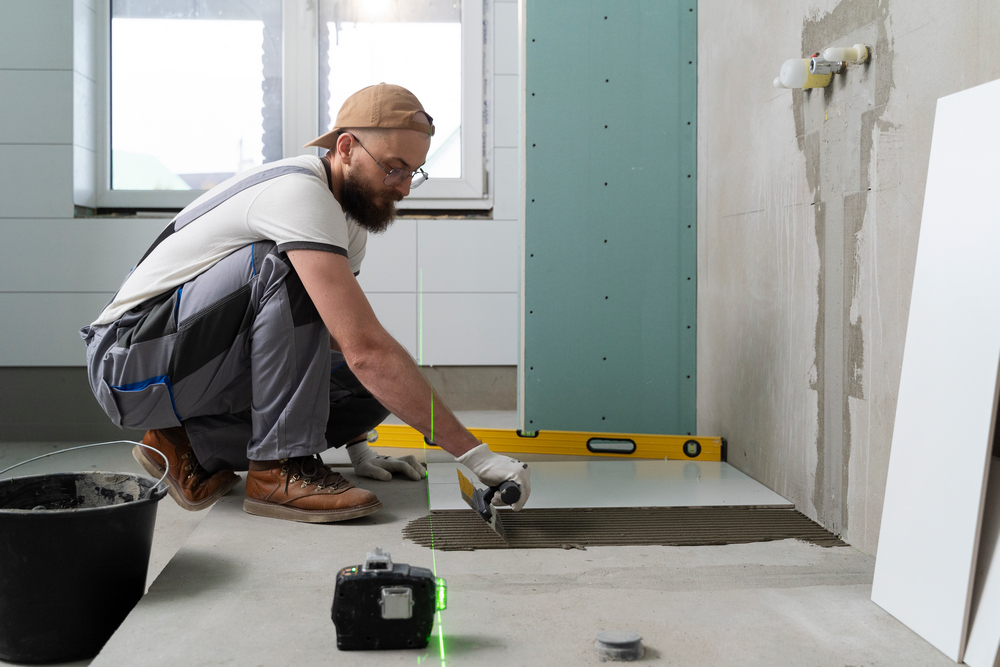





Choosing the right ceramic tiles for your home isn't just about design—it requires precise calculations. Determining the number of tiles needed based on their size is crucial to ensure you purchase the right quantity—neither too much nor too little. Accurate calculations help avoid waste, reduce costs, and ensure a smooth installation process. Proper planning also prevents material shortages that could delay projects or excess purchases that inflate costs unnecessarily. In home renovation or construction, meticulous tile calculations are an essential initial step.
This article provides a detailed guide to calculating tile requirements for the most commonly used sizes: 60x60 cm, 50x50 cm, 40x40 cm, 30x30 cm, and 20x20 cm. Mastering this process offers significant advantages in planning, helps maintain budget efficiency, and ensures a seamless installation. Whether you’re new to construction projects or looking to improve your planning skills, understanding these steps is vital to avoiding costly errors.
How to Calculate 60x60 Ceramic Tile Requirements
- Step 1: Measure Room and Tile Area
First, determine the area of the room where tiles will be installed. For example, if the room is 20 m², calculate the area of one tile (60x60 cm), which is 0.36 m² (60 cm × 60 cm). Divide the total room area by the tile area:
20 m² ÷ 0,36 m² = 55.56tiles (rounded to 56 tiles) - Step 2: Add Spare Tiles
Add approximately 10% of the total as a buffer for breakages or cutting. In this case, you would need around 62 tiles for a 20 m² room. This method applies to rooms of various sizes using the same calculation.
- Step 3: Calculating Tiles for Large Areas and Tile Boxes
For larger spaces, like a 12 m × 14 m house (168 m²), calculate the number of tiles as follows:
168 m²÷0.36 m²=466 tiles
Next, determine the number of tile boxes based on box contents (e.g., 3 or 4 tiles per box): For 3 tiles per box: 466÷3=156 boxes. For 4 tiles per box: 466÷4=117 boxes
How to Calculate 50x50 Ceramic Tile Requirements
- Tiles of 50x50 cm cover an area of 0.25 m² each. For a 20 m² room:
20 m²÷0.25 m²=80 tiles, Add 10% for spare tiles, making it approximately 88 tiles.
Calculating 40x40 Ceramic Tile Requirements
- Step 1: Determine Tile Area and Room Size
Tiles measuring 40x40 cm cover 0.16 m² each. For a 20 m² room:
20 m²÷0.16 m²=125 tiles. Adding 10% for spares, the total becomes around 138 tiles. - Step 2: Calculate Boxes Needed
If one box contains 6 tiles: 125÷6=21 boxes (rounded up to 22)
How to Calculate 30x30 Ceramic Tile Requirements
- For smaller areas like bathrooms or kitchens, tiles measuring 30x30 cm cover 0.09 m² each. For a 20 m² room: 20 m²÷0.09 m²=222 tiles (rounded to 223). With 10% added, you need around 246 tiles.
- Calculating Boxes:
If a box contains 6 tiles, with a total area of 0.54 m²: 20 m²÷0.54 m²=37 boxes
Calculating 20x20 Ceramic Tile Requirements
- Tiles of 20x20 cm cover 0.04 m² each. For a 20 m² room: 20 m²÷0.04 m²=500 tiles. Including 10% spare, the total becomes 550 tiles.
- Cost Estimation:
If 25 tiles cost Rp50,000, for a 3 m² floor, the material cost is approximately Rp50,000, plus installation costs such as cement and labor.
Accurate calculations of tile requirements and costs are essential for effective budgeting before starting a project. Knowing the room dimensions and tile prices ensures sufficient materials are purchased without exceeding budget estimates, helping to avoid shortages or unnecessary expenses during installation.
Want to experience choosing granite in person? Use our Store Locator to find the nearest Vellino Granite store.
Popular Products